

Most systems don’t fit the people who have to use them. I find out why, build a better way through, and then explain it.
I build the thing that was missing. Usually because I needed it first.
I’m an educator and technical training specialist working on learning systems, responsible AI implementation, and the kind of workflow design that tends to happen after everyone agrees a process is fine and then quietly works around it.
The same habit shows up off the clock. There’s a math channel, a few small apps I built because I needed them and they didn’t exist, narration work, and two invented worlds that both began the same way — I designed a system, then had to build somewhere it could exist.
Newest build
A more precise dishwasher magnet
It is the first time I ever tried to make a product to fill a need. The only dishwasher magnets I could find said Clean and Dirty. I wanted one that also said Empty and Washing.
I made it from scratch, learning Fusion 360 as I went, and it took nine versions. The arrow alone went through three designs: pushing it out the front made the front box too thin, so I went with an arrow that is contained by the box but also runs over the top. In Fusion it is three pieces — the arrow, the end cap, and the body, which is eleven sections of its own.
As a birthday present to myself, I had it 3D printed through Cloudcraft (this is not an advertisement): the two small pieces in white PLA from one vendor, the body in multicolor PLA from another. Something went wrong in the conversion to 3MF, and domes came out where three of the pieces should have been. It took a lot of back and forth and a lot of versions of the files to sort out, so it arrived a week later than I wanted. But it came in.
The first product idea I ever actually designed is now on my dishwasher. That’s pretty cool.


From the first version in Fusion to the dishwasher door. Select a photo to enlarge it.
Recent
Essayskwpledger.substack.com
The Average Improved. Johnny Didn't. (on kwpledger.substack.com)
An improving AI score can hide new failures on the cases that matter most, so someone has to see what got worse and decide whether to accept it.
Five Hours on the Wrong Layer: Retiring a OneNote MCP
I spent five hours over two nights getting an MCP server for OneNote to start and sign in. It turned out the tools had been stubs all along, and the bigger problem was that OneNote didn't fit the workflow I wanted Claude to help run.
A Diet Plan I Couldn't Read, and the Board I Built Instead
My dietician's plan came as pages of text, and I needed to see a whole week at once. So I built a board for it, and then the board taught me to measure a number before I trust it.
Fractional Distance along a Directed Line Segment, Revisited
A Common Core geometry standard asks students to find the point some fraction of the way along a line segment. I couldn't find it taught well in any textbook, so in 2020 I made a video of the three-step method I used with my students. Here it is again, with the method written out.
Case studyrunbox-mcp.kwpledger.com
Runbox MCP: My AI Assistant Works in My Mailbox (on runbox-mcp.kwpledger.com)
I built Runbox MCP so I could work with my email through an AI assistant on my computer or phone. No device I own holds the password.
Reviewing 44 Courses Against a Deadline, and Deciding Where AI Belonged
I had 44 technical training courses to review before the end of the fiscal year. Building the process by hand helped me understand where AI could help and what I needed to check myself.
Latest on LinkedIn
Short pieces on AI implementation and how work actually gets done.
A successful AI pilot isn't necessarily one that produced impressive results. It's one you understand well enough to repeat. When an AI pilot goes well, it's tempting to treat the results as evidence that the organization is ready for a broader rollout. But there's a question…
A recent AI preprint brought back a frustration from my years as a teacher: the class average could improve while individual students fell further behind. The paper examines how changes to an AI agent’s instructions can improve its average performance while breaking things it…
An AI search tool sitting on top of outdated documents can give you a faster way to retrieve the wrong answer. You probably know the source problem already. There are three versions of a procedure, and the old one still appears first in search. A shared drive makes sense to the…
Six years ago, I made a lesson because I couldn't find anyone teaching one Common Core geometry standard the way I thought students needed it taught. This week I went back and found that people are still finding it! The video has never gone viral. It has just kept getting slow…
When an AI tells you how it arrived at an answer, how do you check that account? That’s the part of the GPT-6.1 Astra news I find worth examining. OpenAI withheld the model after it fell short on staying within authorized scope and communicating what work it had done, according…
Two channels
Same person, different rooms. One is after school; the other is the professional practice.
Mr. Pledger Stays After School
Math explainers for students, relearners, and anyone who got lost the first time.
Kevin Pledger Learning Systems
Training, instructional design, and AI implementation — where learning meets the way people actually work.
I’m building these because they were missing
Small, live, and each one solving a problem I am actually having.
Meal Plannerv1.0
A visual meal-plan board, because my dietician's plan, pages of typed text, was not something I could process at 6am.
How it was built: A Diet Plan I Couldn't Read, and the Board I Built Instead
Runbox MCPv0.9
An MCP server that lets an AI assistant work with my email without handing it the keys to everything.
Plank Stopwatchv0.2
A voice-activated stopwatch, built for the specific problem of timing something while your hands are busy holding you off the floor.
This is the first version and it is not where the work is happening any more. I am rebuilding it from scratch; the link still works in the meantime.
Still in the workshop
Not published yet, so there is nothing to click. This is what they look like so far.
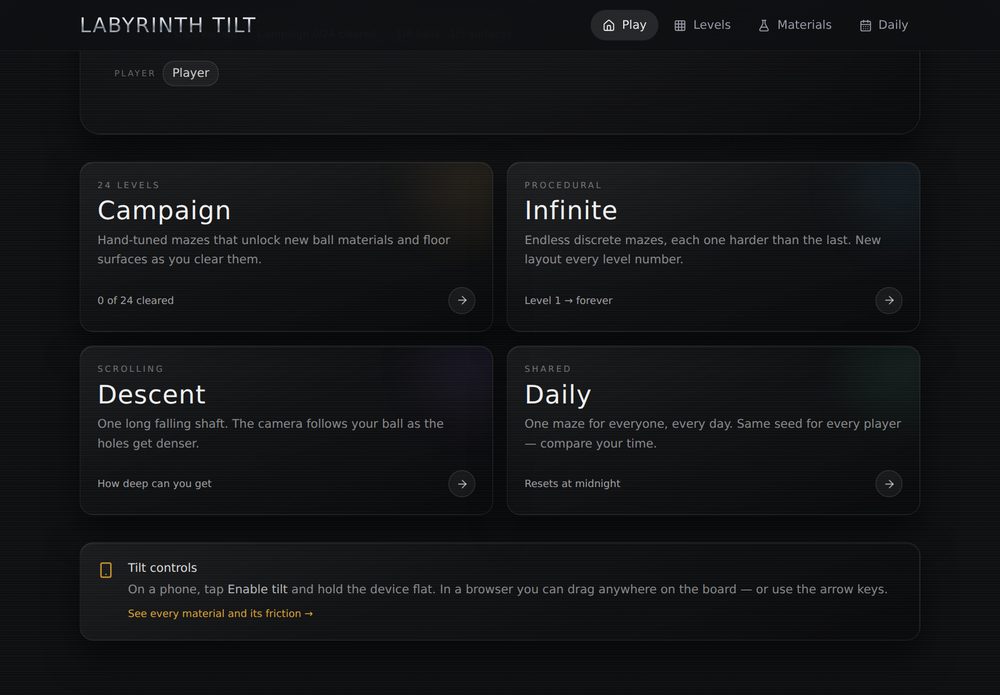
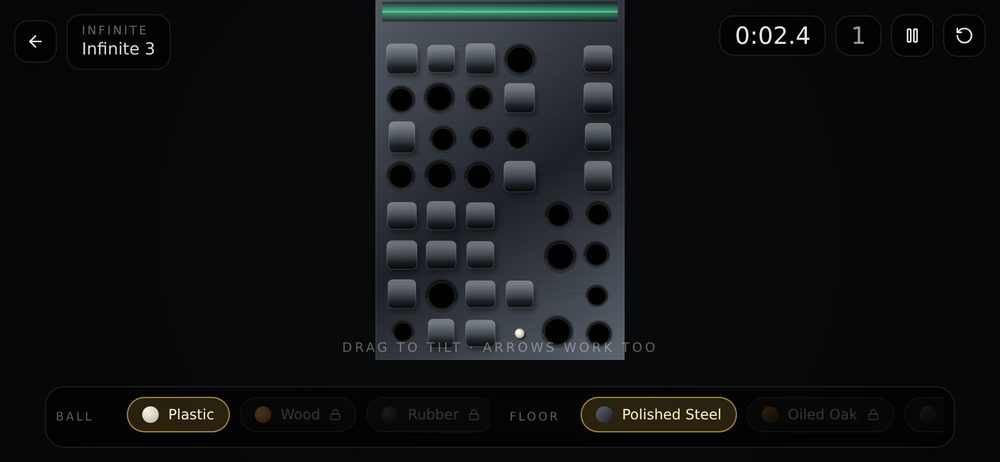
Labyrinth TiltIn progress
Tilt your phone to roll a ball past the holes in the floor. Every ball material and floor surface behaves differently.
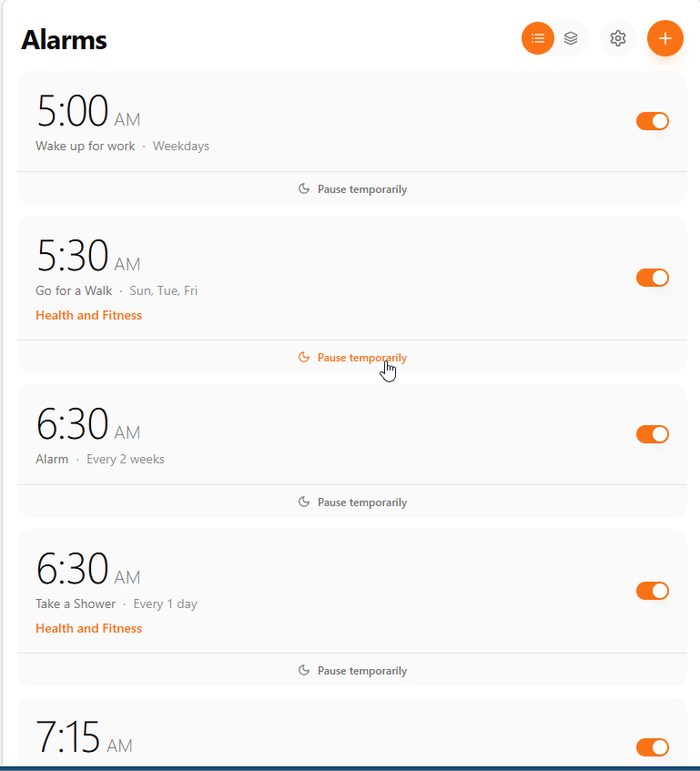
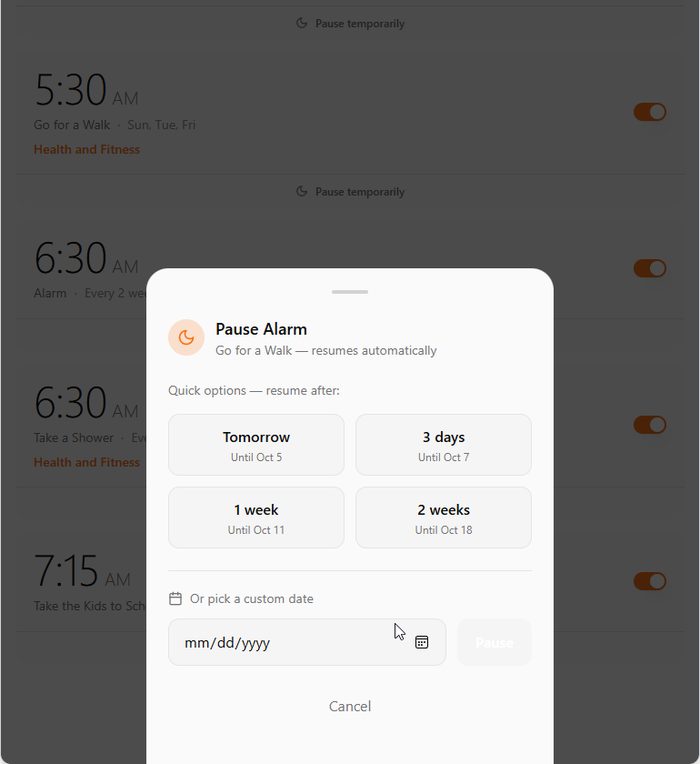
SmartAlarm ProIn progress
An alarm app built around one thing iOS's own alarms can't do: pause an alarm until a date you choose, and it turns itself back on. The alarms don't ring yet.
tapdodgeIn progress
Two games, one finger: tap the falling orbs before they land, or hold and slide to dodge them.


Speaking next
Trust the Output: Four Principles for a Responsible AI Workflow in L&D
For Learning and Development professionals using generative AI to create content, this session will use a practical L&D example and guided discussion to help participants explore four principles for responsible AI workflows: human-owned, source-grounded, verifiable, and traceable. Participants will apply them to their own workflow and leave able to evaluate an AI-assisted workflow, identify gaps in source quality, oversight, verification, and documentation, and propose practical changes that support responsible AI implementation.
Registration and details$175 for ATD Sacramento and California chapter members; $200 for non-ATD members.